Upon the windswept prairie of West Texas in Gaines County lies a large salt lake that was well known to visitors and early settlers alike as a famous campground for the people known as the Numunuh.
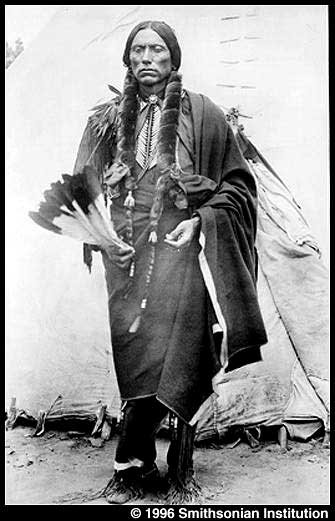
In the year 1852, on the banks of this vast alkaline Laguna, a great American Legend named Quanah Parker was born.
The location was always very important in historical times as it was believed to be a sacred burial ground for powerful leaders of many various tribes - going back in time for many thousands of years, according to archeologists who have studied the area's unique history.
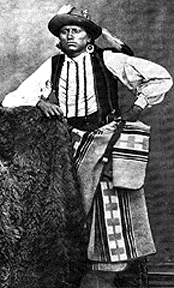
Kwanah's name, according to many, is translated to mean "Sweet Smell" or as some historians say "a bed of flowers" which may refer to a spring time birth. The baby was the son of a white captive woman named Cynthia Ann and her husband the famous Petu Nocona (he who travels alone and returns) of the Noconi band.
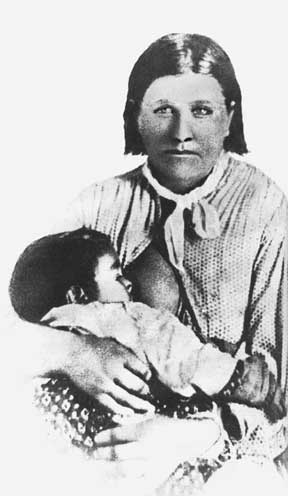
Cynthia Ann (Naudah) & Prairie Flower (Totsiyaa)
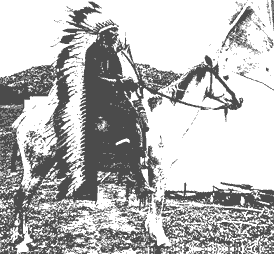
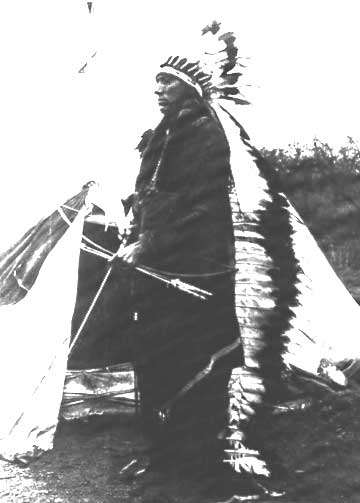
Nocona was in fact the son of a man Pohebits Quasho, otherwise known as Iron Jacket, whom was known to wear the armor of a Spanish Knight into battle, and he was in fact documented by many as being a fearless warrior and a well respected chieftain of his people.
During the years of Kwanah's youth, the Numunuh, famous for making long-distance raids, were at war with the Texans and many settlers and pioneers were killed for encroaching upon lands that did not belong to them.
"The People" as they are known were supreme Horsemen and are quite possibly the greatest mounted warriors known in all of history. This is mainly due to their prowess and skill at war.
During the continual skirmishes of these troublesome times, Kwanah's mother and his little sister were in fact re-captured by Texas Rangers, Sul Ross and Charles Goodnight, about the time when the boy was around 8 years old.
This event happened at a campsite in a place known as Mule Creek which is a tributary of the Pease River near Crowell, Texas.
My own grandmother often spoke to me and other members of my family of visiting this location in her youth, and the location was as a result very well known to our people.
In my grandmother's early days, the area was known for having a cedar stump which marked the exact location of where Cynthia was taken by the Rangers in December of 1860.
It had been reported at that time in official reports, that her husband Nocona was killed during this massacre at Mule Creek.
However, this was later refuted by Kwanah who testified that the man killed at that time was a man named Nobah, and that in fact his father had actually lived for several years after the attack, and was buried in a secret location in the Antelope Hills.
His mother Cynthia, after being re-captured never embraced white society, and after the death of her daughter she would no longer eat food or drink water. It has been said that she died of a broken heart.
Over the years Kwanah proved himself to be a brave warrior and after the death of his father was known to have lived with Horseback's Band.
The People utilized an advanced system of war paths that extended from the Arkansas River in Southwestern Colorado, via Kansas southward, over 1000 miles deep into Mexico.
This vast land became known as Comancheria, and to enter this area without being invited was considered as an act of war and intruders were quite simply killed.
In June of 1867, the United States sought to make peace with the tribes of the region and organized a great council at Medicine Lodge Creek Kansas.
Thousands of Indians among the Numunuh and Kiowa attended these councils, and were represented by many famous and well known individuals. A treaty was at that time signed by the majority of those present.
Kwanah refused to sign the treaty, and indicated that before he and his band would surrender to the white man, that the soldiers would have to come out on the plains and whip them.
A year after the treaty was signed by many, Kwanah was one of nine whom joined Tohausen's Kiowa war party and they quickly began undertaking raids in Chihuahua.
Shortly after returning from these raids, during a council with Asahabi and Tabbenanica, a war party was organized to attack white settlers below the Red River.
The war party attacked quite a number of settlements near Gainsville and began returning home with many horses and mules.
Soldiers apparently caught up with the war party and the leader named Bear's Ear was killed in the attack. During the confusion surrounding his death, Kwanah quickly took action and instructed the braves to drive the horses north of the river which in fact proved to have saved many lives of his companions.
It was at this time that he was now viewed as intelligent and decisive, with excellent leadership skills, and was chosen that night to become the paraiboo of their particular band of Kwahada.
During these times his band was known to live at Double Mountain in Scurry County, and they later settled on the Conchos River.
After a few years, Buffalo Hunters who were in fact encouraged by the US Army began arriving in the region, and began to slaughter millions of the great beasts.
The government hoped that the remaining free Natives would be forced to live on the reservations, as the Buffalo were vital to the needs of the tribes.
As a result, no effort was made to stop the slaughter by the Buffalo Hunters who were in fact mostly made up of army scouts, although such actions were a direct treaty violation.
These violent acts gave rise to a prominent Medicine Man named Esa-Tai who was greatly respected by many, and he quickly began to organize quite a number of bands to make war upon the white man.
A Sun Dance was held at Elk Creek which it was agreed that a great attack would be made on the hunters at Adobe Walls in which all camped there would be killed.
Many fighting men from among the Kiowa, Cheyenne, Arapaho, Apache and Sioux united together and agreed to attack those that was held responsible for the slaughter of their sacred Buffalo.
The War Party was made up of somewhere around 500 men and upon arriving at the walls, they attacked, and what has become known as the Buffalo War had begun.
Apparently the element of surprise was taken from the attacking band of raiders when a beam of the bunkhouse sheltering the residents at adobe walls was believed to have broken.
As a result of a sharp crack, the hunters were awakened by a loud noise prior to the attack and were consequently not taken unawares by surprise.
The attack ultimately failed after Kwanah and several other raiders were wounded via the rifle fire of the hunters who had barricaded themselves within the adobe structures, and the Indians as a result was unable to overrun the trading post.
Between the years of 1874-1875 over sixteen battles were fought in what became known as the Red River War.
To learn more about the Red River War and Adobe Walls, please visit my page on Amarillo, TX.
In June of 1875, Kwanah decided to take his remaining people to live on the reservation after he received word from General Mackenzie that all Numunuh who did not immediately surrender would be exterminated.
After being promised that he and his people would be treated fairly, he and the remaining 450 or so people came to Oklahoma Territory to establish themselves on the reservation.
After arriving to Oklahoma, Kwanah was appointed to regulate the affairs of the people and he also served as a Sheriff and later a tribal court judge.
Times were very difficult for the people during these hard years, and Kwana fought hard to protect the rights and lands belonging to his people and gained the respect and friendship of such men as President Theodore Roosevelt who often would go hunting with him.
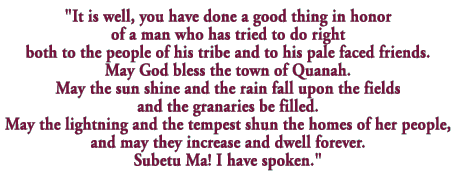
In 1884, a town in Hardeman County was named for him and while visiting after being invited to speak, he gave the following blessing:
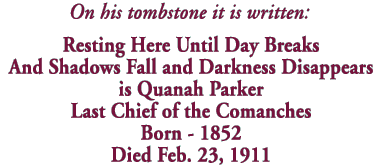
Kwanah passed away in February of 1911. Over four thousand people attended his funeral. The US Government erected a Red Granite monument that was placed over his grave in appreciation.